
Your Desk Has More to Do With Your Mood Than You Think
Ever notice how a messy desk makes you feel a little more frazzled before you've even opened your laptop or turned on your computer? Or how three hours in the same hunched position leaves you tense and short-tempered by 2pm? None of that is a coincidence. Your physical environment feeds directly into your mental state, and for most people, the workspace is where they spend the bulk of their waking hours. With World Mental Health Day being tomorrow, October 10, it's a fitting moment to look at the small, fixable things about our workspaces that quietly add friction to the day.
This isn't a post about swapping your desk for a meditation cushion. It's about recognizing that comfort, order, and a bit of movement genuinely affect how we think and feel, and that a few practical adjustments can lower the daily static without requiring a lifestyle overhaul.
The Physical-Mental Connection Nobody Talks About
Stress doesn't only live in your head. Sit hunched over a keyboard for long stretches, and your body holds tension in your neck, shoulders, and lower back. That physical tension has a way of feeding back into your mood, making you feel more wound up and less able to focus. Studies on posture and mood have shown a real link here: sitting upright, versus slumped, has been associated with better energy and lower stress responses.
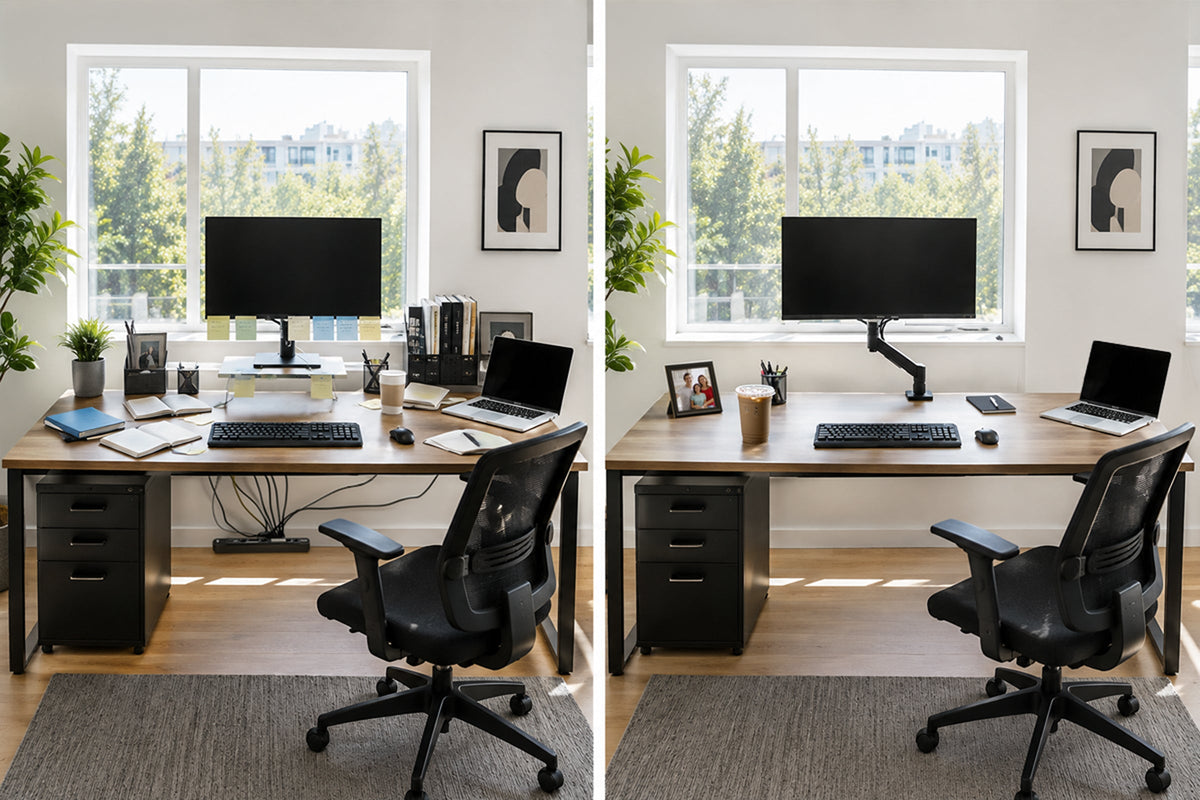
The fix isn't complicated. Something as simple as adjusting your monitor height so you're not craning your neck down all day can take pressure off muscles that otherwise stay clenched from nine to five. A monitor mount that lets you set the screen at eye level removes one of the most common sources of that tension, and it's a one-time setup rather than something you have to think about again.
Movement Breaks the Cycle
Sitting still for hours doesn't just affect your back. It affects your mental clarity, too. Long stretches without movement are linked to sluggish thinking and a flatter mood, while short breaks to stand or stretch can reset both. You don't need a full workout in the middle of your workday. You need permission to change position every so often.
This is where a sit-stand desk converter earns its keep. It doesn't ask you to overhaul your setup or commit to standing all day. It just makes it easy to shift between sitting and standing without leaving your workstation, so movement becomes a natural part of the day instead of something you have to schedule.
Clutter Is a Quiet Stressor
There's a reason a clean desk feels like a small relief. Visual clutter competes for your attention, even when you're not consciously noticing it, and that competition adds a low hum of mental effort to everything else you're trying to do. Cables tangled across your desk, papers stacked in no particular order, and a dozen small objects with no home all chip away at focus over the course of a day.
Simple organization tools solve most of this without much effort. Under-desk cable management keeps cords out of sight and out of the way. A monitor stand with built-in storage gives loose items an actual place to live instead of spreading across your workspace. None of this needs to be elaborate. The goal is just fewer things pulling at your attention so your mind has room to focus on the work itself.
Building a Workspace That Works With You, Not Against You
None of this is about turning your desk into a wellness retreat. It's about noticing where your workspace is quietly working against you and making a few adjustments so it works with you instead. A monitor at the right height. A chance to stand up without disrupting your flow. A desk that isn't buried under things you don't need in front of you.
World Mental Health Day is a good excuse to actually look at your setup instead of just working around it. You don't need to change everything at once. Pick the one thing about your workspace that bothers you most, whether that's neck strain, a cluttered desk, or sitting still for too long, and start there. Small, steady changes to your environment tend to stick a lot better than a total reset, and they add up to a workday that feels less like something to get through and more like something you can actually settle into.


Share:
VIVO Named a Top Standing Desk Setup Brand by DeskRated in 2026
Sweater Weather and Standing Desks: Why Fall Is the Perfect Time to Build Better Habits